


Ambientadores de coche impresos con logotipo: Especificaciones del arte & Proceso de impresión
Para fabricar correctamente ambientadores de coche con logotipo, tu obra debe ser proporcionada en formato PDF vectorial, IA, o EPS en modo de color CMYK en 300 DPI, con sangrado de 2–3 mm y todas las fuentes convertidas en contornos. Conseguir estas especificaciones justo antes de que empiece la producción es el paso más importante para los propietarios de marcas y diseñadores.
¿Qué son los ambientadores de coche con logotipo impreso?
Los ambientadores de coche impresos con logotipo son tarjetas de pulp saturadas de fragancia, Troquelado personalizado en cualquier forma, con la obra de tu marca impresa directamente en la superficie. Son ampliamente utilizados por concesionarios de automóviles, Marcas de consumo, y agencias promocionales como sorteos de marca, Productos de marca propia al por menor, y productos de programas de fidelización.
A diferencia de los ambientadores genéricos de venta al público, Estos sonHerramientas de branding B2B — construido para llevar tu logo, Paleta de colores, y diseño de envases en volumen mayorista. El producto terminado suele incluir una cuerda o cinta elástica para colgar, una bolsa de embalaje OPP, y una tarjeta de cabecera opcional con marca adicional.
Especificaciones de arte para impresión de logotipos
Enviar el archivo equivocado es la principal causa de retrasos en la impresión y reimpresiones. Entender lo que necesita la fábrica antes de enviar cualquier cosa te ahorrará semanas de idas y vueltas.
Requisitos de formato de archivo
Los formatos de archivo preferidos sonPDF, IA, o EPS — todos basados en vectores. Los archivos vectoriales permiten a la fábrica escalar tu logo a cualquier tamaño de impresión sin perder calidad. Archivos ráster de alta resolución (JPG, PNG, o TIFF) son aceptados en300 DPI mínimo en el tamaño final de impresión, pero solo son adecuados para elementos fotográficos.
Antes de enviar, Convierte todas las fuentes en contornos o rutas. Si las fuentes siguen activas en el archivo y el sistema de fábrica no tiene instalada la tipografía, El texto se renderizará incorrectamente en la impresión final. Este paso se lleva 30 segundos y previene un error significativo de producción.
Modo de color & Resolución
Tu obra debe estar configurada comoModo de color CMYK, no RGB. Las pantallas de los ordenadores muestran color usando RGB (rojo, verde, Luz azul), pero la impresión comercial utiliza CMYK (cian, magenta, amarillo, tintas negras). Colores que se ven vivos en pantalla — especialmente los verdes brillantes, Blues eléctrico, y tonos neón — cambian notablemente al convertirse a CMYK, especialmente en cartón de pulpa absorbente.
El blanco es el problema de especificaciones más pasado por alto. La tabla ambientadora es naturalmente de color blanco roto, no es blanco puro. Si tu diseño incluye texto blanco, un fondo blanco, o elementos de logotipo blancos, Debes especificar unCapa dedicada de tinta blanca en tu expediente. Sin ella, esas zonas imprimirán con el color natural de la tabla, no blanca.
| Especificaciones | Requisito |
|---|---|
| Formato de archivo | PDF, IA, EPS (Vector preferido); 300 DPI JPG/PNG/TIFF |
| Modo de color | CMYK (no RGB) |
| Elementos blancos | Se requiere una capa dedicada de tinta blanca |
| Resolución | 300 DPI mínimo en el tamaño final de impresión |
| Sangrado | 2–3 mm alrededor del contorno troquelado |
| Manejo de fuentes | Todas las fuentes convertidas en contornos/rutas |
| Área máxima de impresión | 80×80mm estándar; hasta 90×75mm personalizados |
Sangrado, Zona Segura & Tamaño mínimo del logo
Añadir2Sangrado de –3 mm alrededor de la línea exterior de troquelado. Esta es la zona extra de imagen que se recorta durante el corte — sin ella, cualquier pequeño desplazamiento en la hoja de corte deja un borde blanco en el producto terminado.
Conserva todos los elementos críticos de diseño — los logotipos, Texto, Gráficos clave — al menos3mm dentro del borde acabado. El ancho mínimo legible de los elementos del logotipo a escala de impresión es aproximadamente5mm. Por debajo de este tamaño, Los detalles finos y las formas delgadas de las letras se vuelven ilegibles tras imprimir sobre un sustrato absorbente.
Material en papel & Opciones de sustrato
El material del que está hecho tu ambientador afecta directamente a cómo se imprime tu logo, cuánto dura la fragancia, y cómo se siente el producto en la mano del cliente.
Placa rígida estándar (~20g) es el sustrato estándar de la industria. Es altamente absorbente, Fácil de troquelar en formas complejas, y toma la impresión CMYK a todo color de forma limpia. La vida útil de las fragancias en la placa estándar varía desde2 Para 4 semanas, dependiendo de la carga de fragancia y las condiciones de almacenamiento.
Papel de algodón es una alternativa premium con una versión más blanda, Superficie más táctil. Se adapta a diseños minimalistas y combina bien con acabados de logotipos en relieve o en relieve. Para las marcas que venden en la UE, Reino Unido, o mercados centrados en la sostenibilidad, Papel certificado por FSC está disponible — una certificación que demuestra que la fibra en bruto proviene de bosques gestionados de forma responsable y que cada vez es más requerida por los compradores minoristas.
Métodos de impresión — Cuál es el adecuado para tu marca?
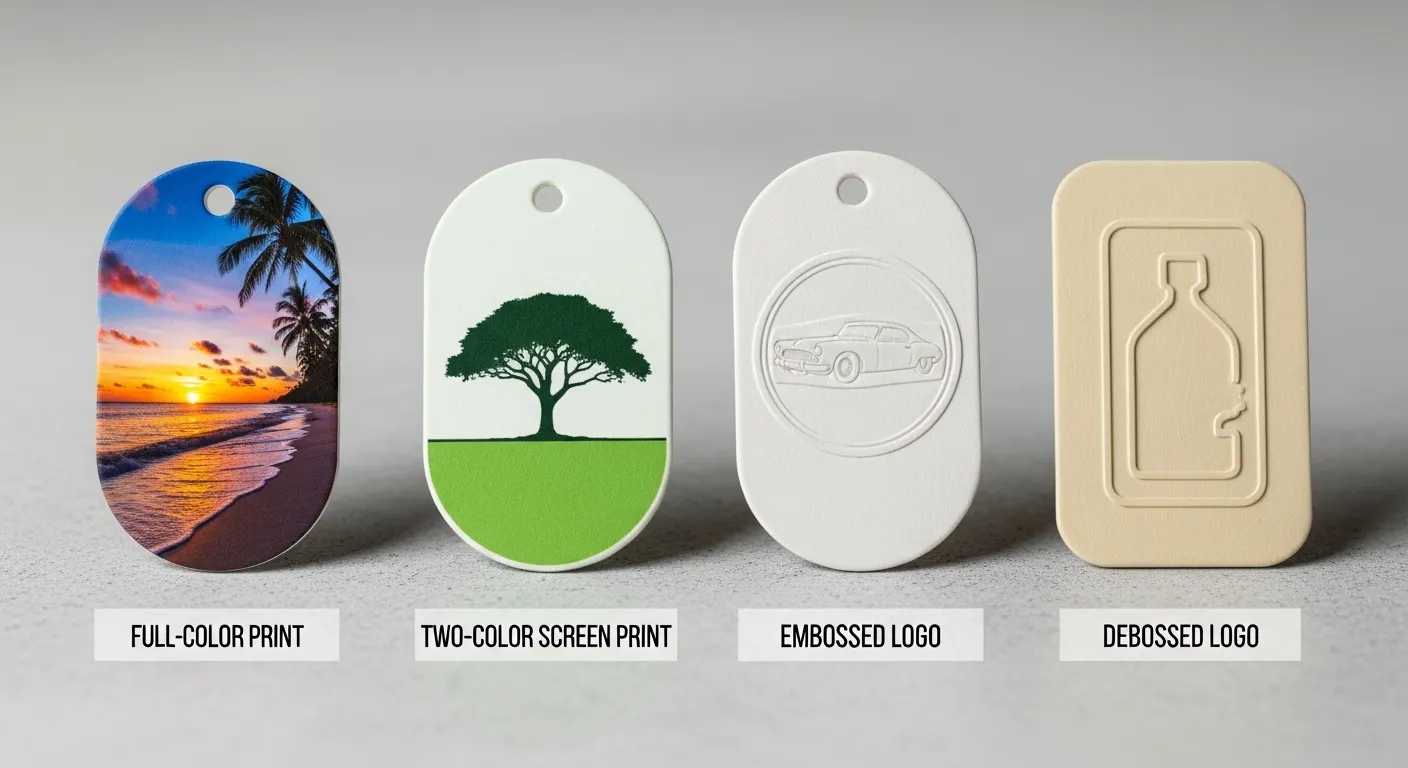
No todos los métodos de impresión funcionan para todos los tipos de logotipos. La elección correcta depende de la complejidad de tu diseño, Recuento de colores, Volumen de pedidos, y el ambiente de marca que quieres proyectar.
| Método | Mejor para | Límite de color | Orden mínimo | Sensación Premium |
|---|---|---|---|---|
| Digital CMYK | Logotipos a todo color, Fotos, Gradientes | Ilimitado | Baja MOQ | Medio |
| Serigrafía | Logotipos simples de 1–3 colores, Rellenos sólidos | 1–4 colores | Alto volumen | Bajo |
| Grabado | Marca táctil de lujo, sin tinta | Sin color | Medio | Alto |
| En relieve | Minimalista, Premium, Marcas refinadas | Sin color | Medio | Alto |
Impresión digital CMYK a todo color es la opción más común para los propietarios de marcas: reproduce logotipos complejos, Imágenes fotográficas, y gradientes sin restricción.Serografía es un método heredado adecuado para ejecuciones de muy alto volumen con diseños sencillos.Acabados en relieve y en relieve Presiona físicamente tu logo contra el tablero, creando un efecto táctil premium sin tinta — ideal para marcas de automóviles de lujo, Productos de amenidades hoteleras, y envases de venta al por menor de alta gama.
Paraambientadores promocionales personalizados de papel con múltiples zonas de color y un aspecto listo para el comercio, CMYK digital con una capa base de tinta blanca es la combinación recomendada.
OEM, ODM & Marca Blanca — ¿Qué opción es la adecuada para ti?
Estos tres términos se usan indistintamente en el mercado, pero significan cosas muy diferentes. Elegir el modelo equivocado puede añadir semanas a tu calendario y costarte dinero en herramientas innecesarias.
OEM (Fabricante de Equipos Originales): Tú aportas el diseño, Obra de arte, Resumen de fragancias, y especificación de forma. El fabricante produce exactamente según tus necesidades. Tú eres el dueño del diseño. Este es el modelo adecuado para marcas consolidadas con activos creativos existentes.
ODM (Fabricante del diseño original): El fabricante diseña y desarrolla el producto — la forma, Perfil de fragancias, Embalaje — a un encargo que proporciones. Eliges o adaptas esos diseños. Esto se adapta a las marcas que entran en una nueva categoría de producto y que necesitan experiencia en diseño en el lado de fábrica.
Marca propia: El fabricante existente, El producto ya hecho se remarca con tu logo y embalaje. El más rápido en llegar al mercado, Menor coste, Menor riesgo — ideal para probar un nuevo mercado o lanzar un campo piloto.
| Opción | Quién diseña? | ¿Quién posee la fórmula? | MOQ | Tiempo de espera | Mejor para |
|---|---|---|---|---|---|
| OEM | Tú (Comprador) | Fabricante | 500–1.000 piezas | 3–5 semanas | Marcas con arte existente |
| ODM | Fabricante | Fabricante | 1,000+ PCS | 5–8 semanas | Desarrollo de nuevos productos |
| Marca propia | Fabricante (Listo) | Fabricante | 100–500 piezas | 2–3 semanas | Entrada rápida en el mercado |
Fabricación de ambientadores OEM y de marca propia de Aroma Ease Service soporta los tres modelos, con asistencia interna en el diseño disponible para proyectos ODM sin coste adicional.
Paso a paso: Del archivo de la ilustración al producto terminado
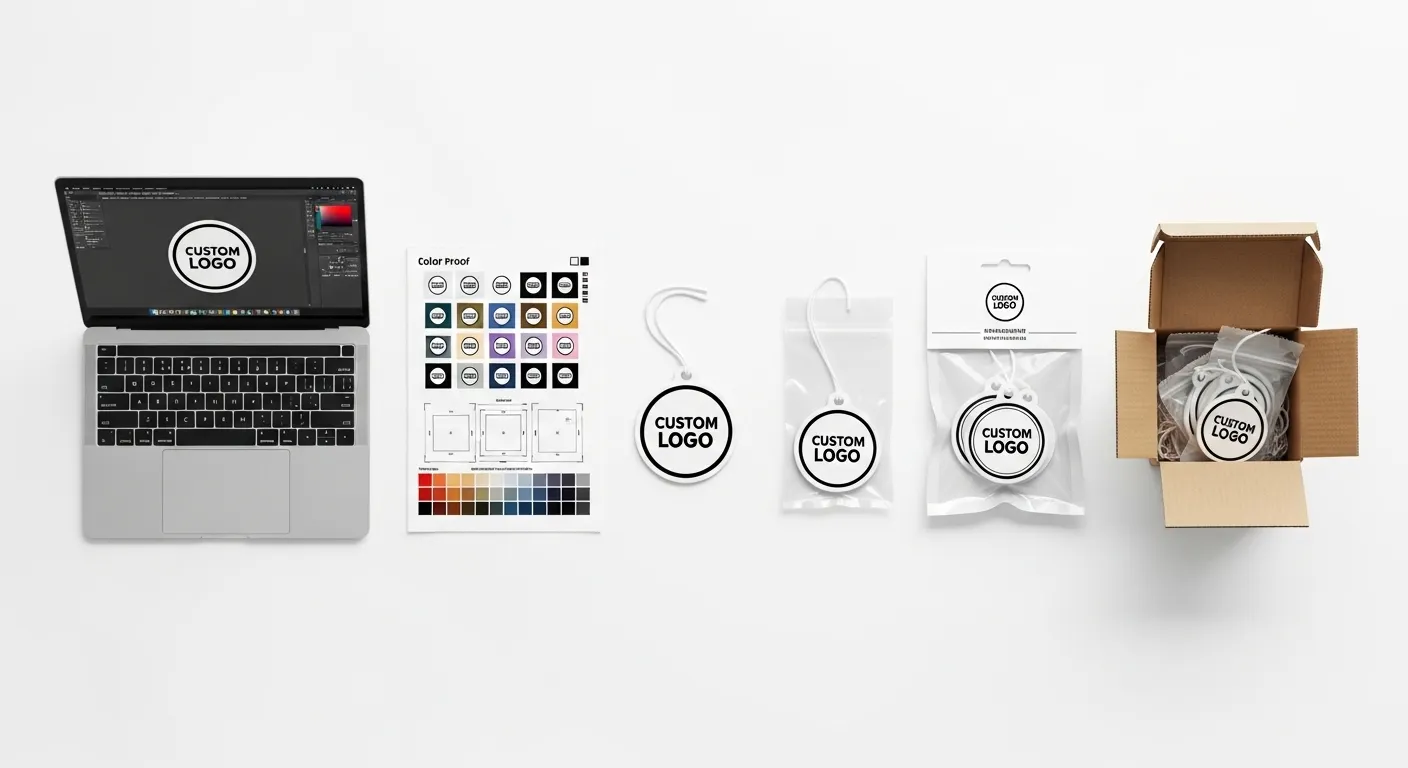
Comprender todo el proceso de producción te ayuda a planificar los plazos con precisión y evitar sorpresas de última hora. Aquí tienes la secuencia exacta desde la entrega de la obra hasta la entrega en tu almacén.
- Envía tu archivo de arte — Envía tu archivo PDF/AI/EPS junto con tu selección de fragancias, Descripción de la forma, y los requisitos de embalaje para la fábrica.
- Comprobación previa a la impresión — El equipo de producción verifica el modo de color (CMYK), Resolución (300 DPI), Margen de sangrado, Contornos de fuentes, y capas de tinta blanca. Las correcciones se señalan antes de que comience cualquier producción.
- Prueba digital enviada al comprador — Una maqueta digital con precisión en color se envía en un plazo de 2–3 días laborables. Ninguna producción comienza sin tu aprobación por escrito.
- Producción física de muestras — Se fabrica una muestra de preproducción y se envía a usted para su aprobación final. Esta etapa dura aproximadamente 2–3 semanas incluyendo el transporte marítimo.
- Producción a granel — Comienza solo después de la aprobación de la muestra. Se realizan las series estándar de producción a granel 6–8 semanas dependiendo del volumen de pedidos y la complejidad de impresión.
- Control de calidad — Cada lote se inspecciona para comprobar la fidelidad de impresión, Consistencia de saturación de fragancias, Precisión en troquelado, y conformidad del envasado antes del embalaje.
- Envasado y etiquetado — Los productos se empaquetan en bolsas de la OPP con tarjetas de cabecera, luego a cajas de exportación. Existen configuraciones listas para venta al público y para envases a granel.
- Naviero — Las órdenes se envían vía Transporte marítimo (20–35 días) para una entrega a granel rentable, o Transporte aéreo de mercancías (5–10 días) para pedidos urgentes o muestras.
Cronología total realista para un primer orden, incluida la aprobación de muestras: 10–14 semanas. Los pedidos usando ilustraciones aprobadas y especificaciones son significativamente más rápidos, ya que se saltan los pasos de preimpresión y muestreo.
Cumplimiento & Certificaciones para compradores globales
El cumplimiento normativo no es opcional para los compradores B2B que importan a la UE, EE. UU., Reino Unido, o mercados del Golfo. Solicitar los documentos adecuados antes de hacer un pedido te protege de retenciones aduaneras, importe rehusales, y retiradas de la lista de minoristas.
| Certificación | Requerida para | Lo que cubre |
|---|---|---|
| IFRA Categoría 10A | Global | Seguridad de fragancias en espacios cerrados para vehículos |
| ALCANCE | Compradores de la UE | Sustancias químicas restringidas en materiales |
| MSDS / SDS | Todos los mercados | Hoja de datos de seguridad para el despacho aduanero |
| CPSC | Compradores estadounidenses | Cumplimiento de la seguridad de productos de consumo |
| Cumplimiento de VOC | EE. UU. (California), NOSOTROS | Límites de emisión de compuestos orgánicos volátiles |
| Certificación FSC | Compradores de etiquetas ecológicas | Obtención sostenible de papel y fibra |
IFRA Categoría 10A es el más crítico para ambientadores de coche específicamente. La Asociación Internacional de Fragancias limita las concentraciones de fragancias para productos utilizados en espacios cerrados de vehículos. Las cargas de fragancia no conformes corren el riesgo de rechazo de importaciones, particularmente en los mercados de la UE y Norteamérica. Solicita siempre el certificado de cumplimiento IFRA junto con la documentación de la ficha de seguridad (MSDS/SDS) para cada fragancia utilizada.
Datos de mercado — Industria de ambientadores para coches en resumen
El segmento de ambientadores de coches de marca está creciendo y la oportunidad comercial para los propietarios de marcas es significativa.
- El mercado global de ambientadores para coches estaba valorado en USD 2.54 mil millones en 2025 y se proyecta que alcance USD 3.21 Billones por 2030, creciendo a una tasa compuesta anual de aproximadamente 4.8–4.9%.
- Norteamérica alberga un 30.45% Compartir del mercado global, seguida por Europa y Asia-Pacífico como la región de más rápido crecimiento.
- Los ambientadores colgantes de papel fabricados en China son el formato dominante en el segmento B2B/marca propia, con costes unitarios de fábrica que varían desde USD $0.07 Para $0.52 por pieza dependiendo de la complejidad de impresión y el volumen de pedidos.
- El MOQ para ambientadores de papel impresos con logotipo personalizado comienza desde 100–500 piezas para marca propia y 500–1.000 piezas para pedidos completos de OEM.
- El segmento promocional y de regalos de marca — concesionarios de automóviles, Programas de fidelización, Productos para eventos — es uno de los casos de uso de más rápido crecimiento a nivel mundial.
Estas cifras confirman que los ambientadores de coche impresos con logotipos personalizados no son un producto de nicho. Son una herramienta de branding B2B convencional con una demanda comercial probada en múltiples sectores.
Sobre Aroma Ease — Socio de impresión de logotipos de Factory-Direct
Facilidad de aroma (airfreshenerpaper.com) es un fabricante con sede en China especializado en ambientadores de papel para coches impresos OEM y de marca propia, operado por Dongguan Aroma Ease Manufacturing Co., Ltd. con sobre 8 Años de experiencia en producción.
La fábrica ofrece capacidades de extremo a extremo bajo un mismo techo:
- Impresión digital CMYK a todo color con soporte de capa de tinta blanca
- Troquelado personalizado para cualquier forma — árbol estándar, Silueta personalizada, o forma de marca
- Desarrollo interno de fragancias — mezcla o selección de aromas personalizada de un catálogo existente de 100+ Fragancias
- OEM, ODM, y marca propia Modelos de producción
- Documentación de cumplimiento — IFRA Categoría 10A, ALCANCE, MSDS/SDS disponible bajo demanda
- Papel certificado por FSC Opciones para marcas ecológicas
- Transporte marítimo global mediante transporte marítimo y aéreo con seguimiento completo
El tiempo de entrega de producción es15–20 días para órdenes estándar, con un plazo de respuesta más rápido disponible para los pedidos. El equipo realiza la revisión interna de las ilustraciones pre-impresión, Demostraciones digitales, y muestras físicas antes de que comience cualquier tirada a granel. Explora todo el espectro deambientadores personalizados para coches de papel disponible para proveedores OEM y mayoristas.
Preguntas frecuentes — Ambientadores de coche impresos con logotipo
Los formatos preferidos son el PDF, IA, o archivos vectoriales EPS. JPG de alta resolución, PNG, o se aceptan archivos TIFF en 300 DPI o superior en el tamaño final de impresión, pero son adecuadas solo para elementos fotográficos o raster. Convierte todas las fuentes en esquemas antes de enviar. Si suministras un archivo RGB, se convertirá a CMYK — se te enviará una prueba de color digital para que puedas aprobar el resultado de color antes de que comience la producción.
No automáticamente. Las pantallas usan color RGB, las impresoras usan CMYK, y el cartón de pulpa absorbente puede atenuar los colores saturados en comparación con el papel recubierto. Los colores RGB muy brillantes o neón pueden cambiar notablemente en la impresión CMYK. Una capa base de tinta blanca ayuda a mantener la precisión del color en la pizarra blanca. La fábrica enviará una prueba digital — y una muestra física bajo petición — antes de la producción a granel para que puedas verificar la precisión del color.
MOQ comienza con 100–500 piezas para pedidos de marca propia y 500–1.000 piezas para pedidos completos OEM con formas y ilustraciones personalizadas. Cantidades de pedido más bajas resultan en un coste unitario más alto; Los descuentos por mayor comienzan en 1,000+ Piezas. Hay muestras físicas disponibles antes de hacer un pedido al mayoreo para que puedas evaluar la calidad de la impresión, fragancia, y el embalaje antes de comprometerse con la producción completa.
Como mínimo, Solicitud: un Certificado de cumplimiento IFRA Categoría 10A (Seguridad de fragancias para uso en vehículos cerrados), a Declaración de cumplimiento de REACH (necesario para la entrada al mercado de la UE), y Documentación de la MSDS/SDS Para cada fragancia utilizada — esto es obligatorio por las autoridades aduaneras en la mayoría de los países importadores. Para ventas en EE. UU., pregunta sobre el cumplimiento de la CPSC. Para el posicionamiento de etiquetas ecológicas, La certificación en papel FSC está disponible.
La cronología para un primer orden es la siguiente: Envío de obras y revisión previa a la prensa (2–3 días) → aprobación de pruebas digitales (1–2 días) → producción y entrega física de muestras (2–3 semanas) → producción masiva tras la firma de la muestra (6–8 semanas) → Transporte marítimo (5–10 días por transporte aéreo, 20–35 días por transporte marítimo). Una línea temporal realista de principio a fin para un primer orden es 10–14 semanas. Los pedidos con arte aprobado previamente son significativamente más rápidos, a medida que se omiten los pasos de muestreo y preimpresión.
Listo para poner tu logo en un ambientador personalizado para coche? Contacta con el equipo de Aroma Ease enairfreshenerpaper.com para enviar tu obra para una revisión gratuita previa a la prensa, solicitar una muestra física, o pide un presupuesto directo de fábrica dentro de 24 Horarios. Comparte tu archivo de logotipo, Cantidad objetivo, y preferencia de fragancias — y el equipo de producción se encargará del resto.


- Papel ambientador de coche de marca
- Ambientador de coche con aroma fresco
- Ambientador de coche de aroma fuerte
- Ambientador de fragancias para coches
- potenciador de aroma del interior del coche
- Ambientador para coche para mal olor
- Ambientadores perfumados para coches
- Ambientadores de papel personalizados en pequeñas cantidades
- ambientadores de papel personalizados con logotipo
- ambientadores de papel impresos con el logo
- ambientadores de papel para habitaciones de hotel
- Ambientadores personalizados
- Ambientador de papel OEM
- Ambientador de regalo magnético
- Papel eliminador de olores para humo
- ambientador ecológico de papel
- Ambientadores de papel
- Fragancia de coche
- Fragancia ecológica
- Embalaje sostenible
- Respuesta rápida
- Promociones ecológicas
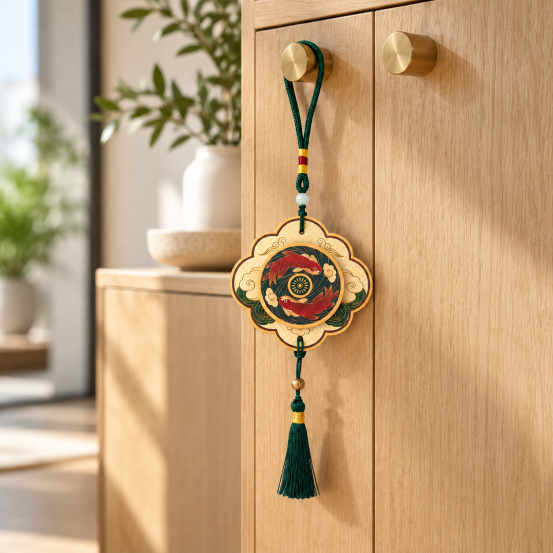
Da vida a tu marca con ambientadores de papel personalizados.
- Materiales ecológicos
- Diseños personalizados
- Fragancia duradera
- Respuesta rápida
- Impresión de alta calidad
- Precios competitivos
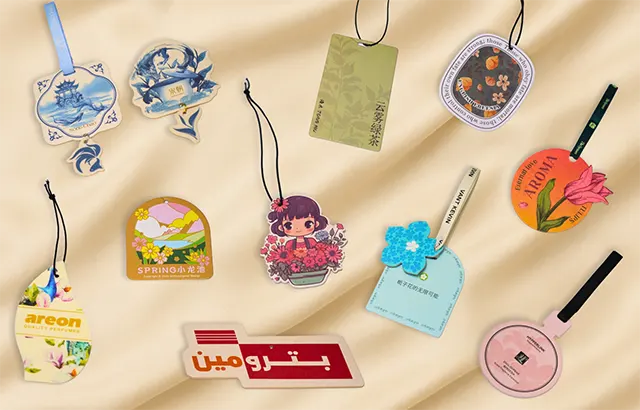

MUESTRA GRATIS